One Country, Many Wars: Nigeria's State Police Bill, Read Through the Data
Nigeria's lawmakers have approved a bill to break the federal police monopoly and let states run their own forces. Strip away the politics and the core argument is about geography, which is exactly what OpenWatch's incident record measures. Here is what the data says about the crisis the bill answers, and what state police would and would not fix.
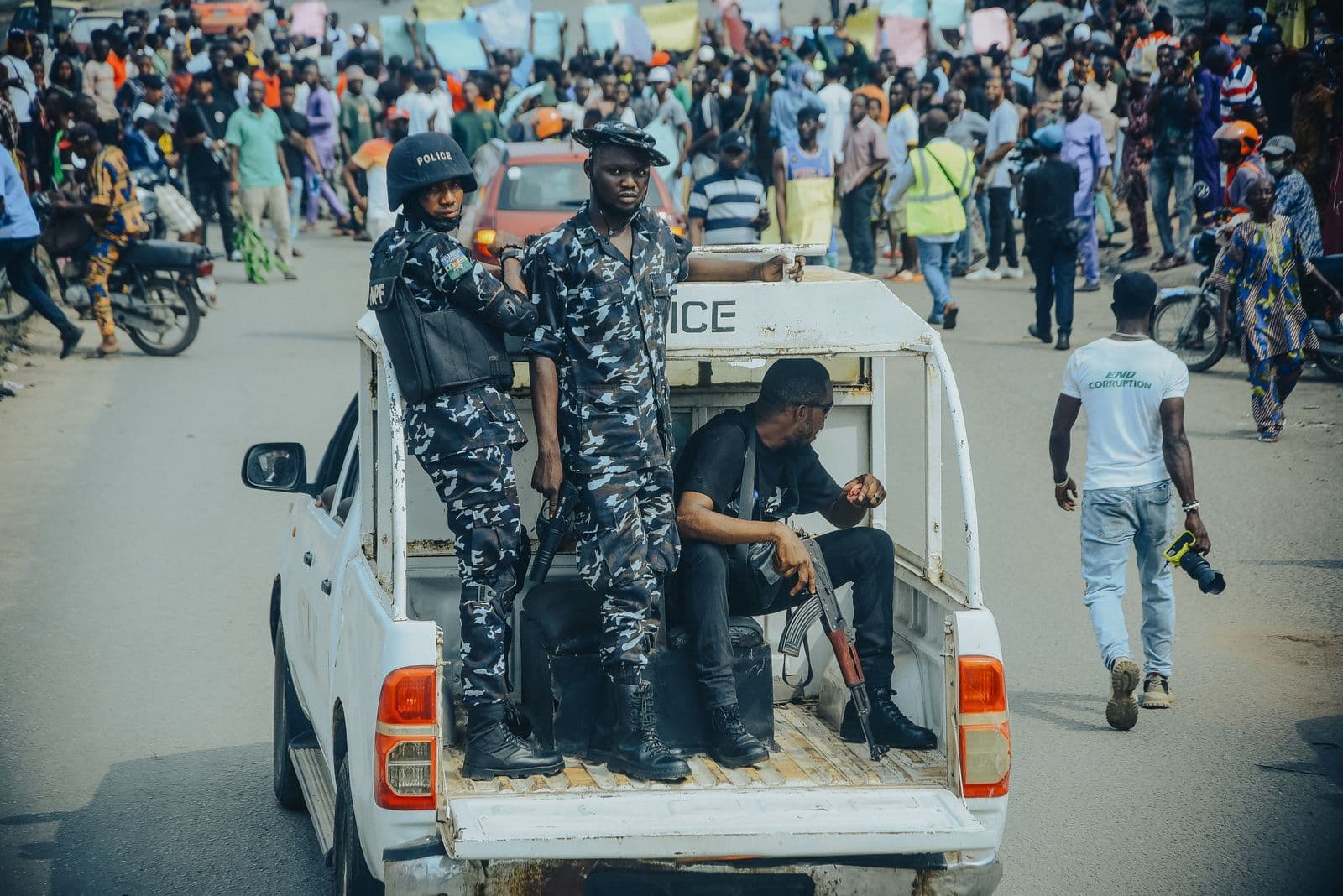
For more than two decades, Nigeria has policed a continent-sized country of over 200 million people with a single, centralised force commanded from Abuja. In June 2026 the National Assembly moved to end that arrangement. The House of Representatives passed a state police bill by 289 votes to one, the Senate followed, and for the first time a dual policing system, federal and state forces side by side, is within reach.
The debate around it is loud and political. But underneath the politics is an empirical claim: that a single national force can no longer secure the country. That claim is testable. OpenWatch has recorded more than 29,000 verified security incidents across Nigeria since 2009, with over 95,000 fatalities, and the shape of that record is the strongest argument in the room.
A Bill Born of an Emergency
The bill is not an abstract governance reform. It is a response to a security situation that has, in places, slipped beyond the reach of the state. It would convert the Nigeria Police Force into a "Nigeria Police Service", let each of the 36 states and the Federal Capital Territory establish its own force, and split funding so that the federal service draws on the Consolidated Revenue Fund while states finance their own. Officers would transfer to federal or state services over a 24-month transition, and the whole thing requires amending the 1999 Constitution, which means ratification by at least 24 of the 36 state assemblies and presidential assent before it becomes law.
That is a profound constitutional change, and lawmakers did not reach for it casually. They reached for it because the existing model has been visibly failing in specific places, for years.
One Country, Many Wars
The single most important fact in the OpenWatch record is that Nigeria does not have one security problem. It has several, and they do not overlap.
In the North East, the threat is insurgency: Borno alone carries over 23,000 recorded fatalities, driven by Boko Haram and ISWAP. In the North West, it is banditry: armed groups in Zamfara, Katsina and Sokoto that abduct, extort and hold territory. In the North Central Middle Belt, it is communal violence: the farmer-herder killings that make Plateau and Benue among the deadliest states in the country. In the South West and South, the dominant threats are kidnapping and urban armed crime, the profile that gives Lagos the highest raw incident count while keeping its lethality comparatively low.
A police force optimised to fight an entrenched insurgency in Borno is not the force you would design to mediate a land dispute in Benue or run urban detective work in Lagos. That is the heart of the case for decentralised policing: the threats are local, the knowledge required to counter them is local, and a command structure in Abuja is poorly placed to be expert in all of them at once. The OpenWatch state risk index makes the divergence concrete, ranking every state and showing which threat type actually dominates there.
Where the State Has Already Withdrawn
The bill is also, quietly, an admission. In parts of the North West the federal model has not merely underperformed, it has been replaced. In Zamfara, armed groups have imposed curfews and a 30 million naira levy on entire communities, taxing and governing where the state does not. Police are not just absent in such places; they are targets, as in the attack on a police station in Dansadau.
When an armed group can set a curfew and collect a tax, the question is no longer whether the police are effective. It is whether the state is present at all. State police are, in part, a bet that locally raised, locally accountable forces can re-establish that presence where a distant central command has not.
The Safeguards Question
If the case for state police is written in the data, so is the case against it. The loudest objection is political weaponisation: the fear that governors will turn their own police on opponents, especially around elections. This is not hypothetical. OpenWatch already records politically tinged violence, including incidents in which rival party loyalists attack and abduct each other. Hand a governor a police force and that risk grows.
The bill tries to fence this off. State commissioners would be appointed by governors but confirmed by state assemblies and the National Police Council; commissioners could refuse unlawful directives; an expanded oversight council and Complaints Response Units would, in theory, catch abuse. Whether those safeguards hold under real political pressure is the central unknown, and it is the right thing to watch.
The other objections are structural. Many states cannot reliably fund the obligations they already have, which makes a self-funded police service a fiscal gamble and risks a country where wealthy states are well policed and poor ones are not. Crime crosses state lines while jurisdiction does not, and cross-border armed networks like the Lakurawa now operating along the Niger border do not respect state boundaries any more than they respect national ones.
What State Police Would, and Would Not, Fix
Read against the record, the likely outcome is uneven. Localised forces with local intelligence could genuinely help against the threats that are themselves local and embedded: rural banditry, communal violence, urban crime. Those are exactly the categories where distant federal command is weakest.
What state police would not fix is the part of the crisis that is not local. They will not, on their own, defeat an insurgency with regional and cross-border dimensions, they will not conjure funding that poor states do not have, and they cannot remove the risk that the cure becomes its own disease through political capture. The bill is a serious response to a measured emergency. Whether it helps will depend less on the idea than on the safeguards, the money, and the discipline behind it.
What is not in doubt is the emergency itself. The numbers that pushed a constitutional amendment through the House by 289 to one are real, and they are not improving on their own. See where your state stands in the state risk index, and how the underlying threats break down in our analyses of kidnapping, North-West banditry and the Middle Belt.
OpenWatch tracks security incidents across all 36 states and the FCT in real time. Monitor live risk by state and corridor on the live map and the monthly security report.